

How should an employer plan AI corporate training in Malaysia?
Start with a business task and the employees who need to perform or review it. Define a practical learning output, separate introductory awareness from role-specific practice and confirm approved tools and data before the session. Agree the delivery scope and assessment with the provider, then nominate a manager to review a checked participant output. If HRD Corp funding is relevant, verify the exact programme and employer requirements separately. Training should build usable skills, not merely show a long list of AI applications.
Describe what employees should be able to prepare, check or explain after training before choosing software features.
Give staff relevant work examples and teach managers how to review outputs and set boundaries.
Keep a checked output and feedback so the employer can see what participants learned and what remains unresolved.
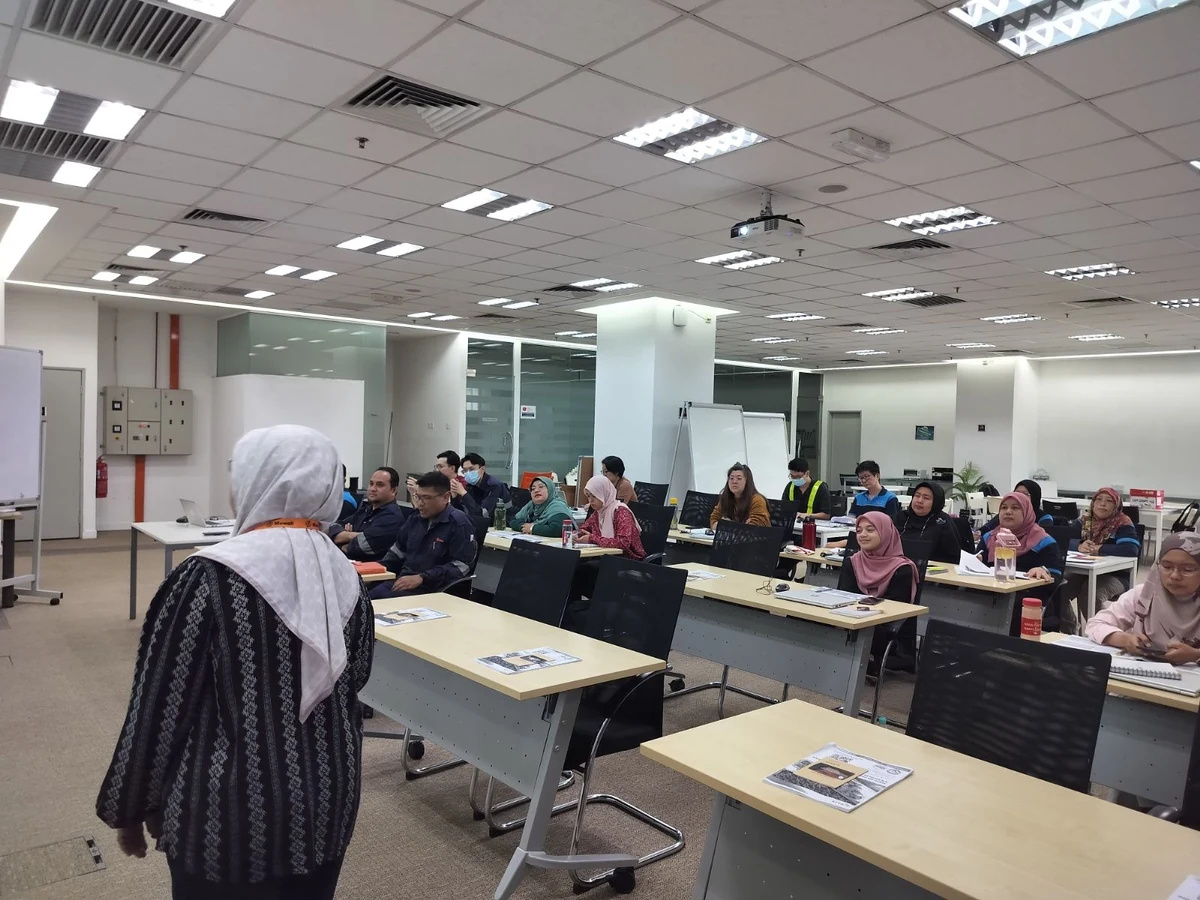
AI corporate training in Malaysia is an opportunity to give employees a shared way of working with AI while keeping responsibilities clear. For a manufacturer, the programme may involve office teams, factory supervisors and quality reviewers—not only a technical department.
The planning challenge is to make the learning relevant without treating every participant as the same type of user. An HR coordinator may need a draft checklist, a purchasing executive may need a checked comparison, and a manager may need to judge whether either task is suitable for approved workplace use.
This guide helps employers write a useful corporate training brief and evaluate learning. The suggested structure and examples are editorial recommendations, not an official syllabus, a completed customer project or a promise that every AIGreen Plus programme includes these activities.
What makes corporate AI training different from a public introductory course?
An employer-led brief can connect learning to shared tools, policies and department tasks. A public introduction may provide useful awareness but may not address your company's permissions, records or review process. Neither format is automatically better: confirm the intended participants, exercises, access arrangements and actual delivery scope. A private session is not necessarily customised, and a workshop is not the same as developing a production automation system.
Plan learning for users, process teams and managers
These three suggested learning groups are not an accredited competency framework. Adapt them to the participants' responsibilities; a person may need more than one group of skills.
| Learning group | Useful practice | Evidence to review |
|---|---|---|
| Employees new to AI | Recognise suitable uses, write a bounded request and find an unsupported claim in a draft made from approved practice records. | The participant explains what the source supports, what is missing and when to seek help. |
| Department task users | Prepare a role-relevant summary or comparison with source references, then correct missing fields and misleading conclusions. | The task owner checks the draft against its source and records corrections before any use. |
| Managers & reviewers | Assess a proposed use case, name the authorised reviewer and define the conditions for stopping or escalating it. | The manager can explain permissions, decision limits and the evidence needed before workplace adoption. |
Five decisions before confirming a corporate AI workshop.
Define the work and learning output
Name the business task, its present difficulty and a participant output that can be assessed against a source.
Group participants by role
Check starting skills, language needs and responsibilities. Separate broad awareness from task practice and management review where appropriate.
Resolve accounts and practice data
Confirm the permitted tools, devices and access. Use suitable synthetic records until real-data use has been approved.
Agree delivery and complete scope
Confirm exercises, trainer relevance, format, fee inclusions, assessment, support and any funding checks in writing.
Name the learning follow-through owner
Choose who receives participant feedback and checks a relevant output. Decide on workplace use separately under the process owner's controls.
1. Turn a broad AI objective into a usable learning brief
An objective such as improve productivity is too broad to design an exercise around. Describe the work instead: staff spend time turning meeting notes into a follow-up list, comparing supplier quotations or preparing a departmental report. Then name what the participant should produce and what the reviewer will check.
For example, a purchasing team might learn to prepare a comparison that retains units, currencies, quantities and commercial terms. The learning objective is a traceable comparison with missing information clearly flagged—not a guaranteed reduction in purchasing cost. An exercise does not establish that a tool can make the final buying decision.
2. Decide what the organisation must prepare first
A session can lose useful practice time if learners cannot access the agreed tool or if the demonstration relies on features unavailable in their accounts. Confirm the tool environment, permitted account types, device arrangements and any software costs. Ask for a suitable exercise arrangement if factory staff do not normally use a laptop at work.
Agree who supplies practice records and who checks that they can be used. Employee information, customer details, supplier terms and sensitive process documents require appropriate permissions. Removing names may not remove all sensitivity. When approval is unclear, choose synthetic examples that preserve the task's structure without exposing real records.
Malaysia's Personal Data Protection Department provides guidance on notices that explain how personal data is processed. That guidance is useful context, not permission to upload personal data to an AI service. The relevant privacy and security owners should assess the intended use; this guide is not legal advice or a complete compliance checklist.
3. Use one business scenario to connect departments
Consider an illustrative supplier-delivery scenario. Purchasing reviews agreed delivery terms, warehouse records what arrived, and QA records an open inspection observation. A learning exercise can ask participants to prepare a draft exception brief from an approved practice pack, with a source reference for each statement.
Each department checks a different part of the same brief. Purchasing verifies the terms; warehouse verifies the receiving record; quality verifies that the open observation has not been presented as closed. The manager checks which question still needs a decision. This teaches handover and review rather than encouraging the tool to guess missing facts.
In a food-manufacturing adaptation, preserve batch and inspection references. Do not allow the draft to imply product release or food-safety clearance. Those decisions remain with authorised qualified staff and approved procedures. This is a teaching scenario, not a delivered client engagement or evidence of business results.
4. Match delivery to the participants, not the brochure
Ask how the proposed format supports practice and feedback. A common introduction can establish shared vocabulary, followed by relevant department exercises. Managers may need a separate discussion of approval boundaries and review evidence. These arrangements must be agreed; they are not automatic inclusions in a corporate workshop.
Confirm language, accessibility needs, starting skills and the number of people who can meaningfully practise in the proposed setup. For shift-based manufacturing teams, discuss attendance arrangements without assuming a particular schedule or delivery capacity. In-house, online and public-course options should be compared on actual scope, not on a label alone.
5. Send a concise programme brief before requesting a quotation
A strong enquiry might read: We want our purchasing and warehouse teams to prepare a checked delivery-exception brief. Participants have basic spreadsheet experience. Please propose an exercise using synthetic records in our approved tool environment, explain the required accounts and show how source checking will be assessed. Confirm delivery arrangements, full fee scope and what follow-up is included.
Add your preferred language, location or format, participant group and preparation constraints. Ask the provider to identify assumptions and exclusions. Use the same brief for comparisons so an introductory talk is not priced against a hands-on workshop with different requirements.
Clarify whether the quotation covers attendance, materials, software, assessment, travel or venue arrangements and applicable charges. If support is offered, confirm its channel, duration and scope. Learning-question support does not necessarily include workflow development, systems integration or ongoing technical maintenance.
6. Teach responsible use as part of the exercise
AI Malaysia's Learn AI page emphasises awareness of AI's potential, challenges and impact so people can make informed decisions. Corporate learning should connect that awareness to concrete behaviour: check a source, recognise an unsuitable input and know when an output should not be used.
Malaysia's AI Code of Ethics is voluntary, non-binding guidance supporting responsible, human-centred and trustworthy AI. It does not replace applicable legal obligations. Training can introduce these considerations, but a course certificate does not certify that an organisation complies with every relevant requirement.
Set decision boundaries that match the task. AI-generated text should not become an unreviewed policy, employee decision, supplier approval or quality instruction. A named reviewer needs appropriate subject knowledge and authority; simply asking someone to look at the output is not a complete control.
AI Malaysia: AI awareness and learning · AI Malaysia: voluntary AI Code of Ethics
7. Check HRD Corp funding separately from training quality
If funding is part of the plan, check the exact programme details. HRD Corp's registration page describes programme registration under its Claimable Course Scheme and relevant trainer competency. A provider badge alone does not show that every programme is registered or that your employer's application will be approved.
Compare the proposed programme with the registration details, then verify employer eligibility, current application and grant conditions and allowable costs with HRD Corp. Do not treat a quotation or application as approval. This article does not establish that any particular AIGreen Plus programme is registered or that a claim is guaranteed.
HRD Corp: programme registration · Employer claimability checklist
8. Make the next step a manager-reviewed piece of work
At the end of learning, keep an approved input, the task brief, the checked output and feedback. Ask the participant to explain a correction and an issue that remains outside their authority. This gives the manager something useful to assess rather than relying only on attendance or satisfaction.
For a later follow-through check, agree one comparable task and who reviews it. Assess accuracy, completeness and appropriate escalation before claiming time savings. Include preparation, checking and rework when measuring time. A classroom improvement is not evidence of a company-wide productivity gain or headcount reduction.
Training and implementation are separate decisions. A workshop may develop employee capability, while a live workflow can require process design, integrations, security review, testing and ongoing ownership. Use our manufacturing skills map to identify useful practice and the course-selection guide to compare a proposed programme's scope.
Manufacturing team AI skills map · AI Training Malaysia: course-selection guide
Show the employer what changed in learning.
These suggested checks help review programme relevance and employee learning. They are not reported client outcomes, an official assessment standard or guaranteed business gains. Agree the exercise scope and evaluation method in advance.
| Measure | Definition / method | Evidence source | Reviewer |
|---|---|---|---|
| Readiness | Confirm whether participants have the approved accounts, practice records and prerequisites before the session; record unresolved blockers. | Preparation brief and access check | HR/learning lead and IT owner |
| Checked task output | Review required fields, source references, errors and unresolved questions against the agreed exercise brief. | Practice pack and annotated participant output | Facilitator and department reviewer |
| Responsible-use understanding | Ask the learner to explain an unsuitable input, an unsupported result and the correct escalation or approval route. | Participant explanation and feedback | Facilitator and relevant process owner |
| Transfer to work | Review a later approved task of comparable scope, including checking and rework; assess suitability before wider use. | Manager-reviewed work sample and follow-through notes | Department manager |
Discuss corporate AI learning with AIGreen Plus.
Share your participant groups, their starting skills and one workplace output with AIGreen Plus. Explore our manufacturing AI training catalogue and confirm the proposed programme, tools, exercises, delivery and assessment in writing. This guide is not a completed customer engagement, a fixed service package or a guarantee of results.
Explore AI Training for ManufacturingFrequently asked questions.
Direct answers about the scope and responsible use of this training topic.
What is AI corporate training in Malaysia?
It is employee learning planned around an organisation's objectives, roles and permitted tools. A useful programme connects AI awareness with relevant exercises, source checking and clear human responsibilities. Confirm the actual delivery scope with the provider.
Who should attend a corporate AI workshop?
The right participants depend on the task. Office staff, supervisors, purchasing, warehouse, quality, HR and managers may need different practice. Match the learning group to starting skills and responsibilities rather than assuming one session suits everyone.
Do employees need coding experience?
Basic drafting and source-checking exercises may not require coding. Technical analysis, systems integrations or model development can require additional skills. Confirm prerequisites and permitted tools for the selected programme.
What should an employer include in the training enquiry?
State the participant roles, starting skills, work task, expected output, approved tools and practice-data limits. Add language and delivery preferences, then request the exercise, assessment method, full fee scope, assumptions and exclusions.
Can corporate AI training use our confidential documents?
Only under approved data, tool and access arrangements. Use suitable synthetic examples where approval is unclear. A training session or privacy notice alone does not authorise uploading confidential, employee or customer information to an AI service.
Is in-house AI training better than a public or online course?
It depends on the participants and agreed scope. An employer-led session can address shared tasks and policies, but private delivery is not automatically customised. Compare practical arrangements, feedback, access and inclusions before choosing.
How much does AI corporate training cost in Malaysia?
This guide does not state a fixed fee. Request a quotation for the participant group, delivery format, exercises, hours, account needs, materials and support. Compare full inclusions and applicable charges, not only the headline price.
How long should a corporate AI training programme be?
Duration should follow the learning outcomes, starting skills, practice time and feedback needs. Confirm the proposed hours and scope with the provider. This guide does not promise a fixed programme duration or delivery availability.
Is AI corporate training automatically HRD Corp claimable?
No. Verify the exact programme registration and separately check employer eligibility and current grant conditions with HRD Corp. This article does not confirm that a particular AIGreen Plus programme is registered or that a claim will be approved.
Does corporate AI training deliver a working automation system?
Not unless a separate implementation scope is expressly agreed. Training builds employee capability; deploying a workflow may require design, integrations, testing and ongoing ownership. Neither attendance nor a certificate guarantees productivity gains or organisational compliance.
Further reading
Official sources checked on 10 November 2026. They support the qualified awareness, governance, privacy and programme-registration statements. The corporate training brief, learning groups and evidence checks are AIGreen Plus editorial recommendations.
